
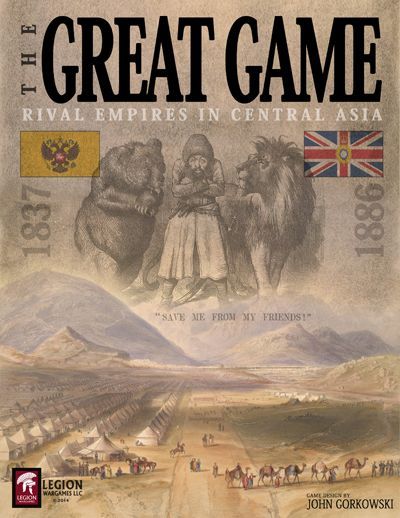
The Great Game: Rival Empires in Central Asia 1837-1886 (2018) Board Game

Brief History and Background Information for The Great Game: Rival Empires in Central Asia 1837-1886
“The Great Game” refers to the strategic rivalry and conflict between the British Empire and the Russian Empire in Central Asia during the 19th century. This period saw both empires vying for influence and control over the region, with espionage, diplomatic maneuvering, and military engagements all playing a role in shaping the outcome.
Game Components of The Great Game: Rival Empires in Central Asia 1837-1886
- The game board depicting the Central Asian region
- Player cards representing different actions and strategies
- Dice for resolving battles and events
- Tokens and markers for tracking influence and control
- Rulebook with detailed instructions
How To Setup The Great Game: Rival Empires in Central Asia 1837-1886
- Place the game board in the center of the table
- Each player chooses a side (British or Russian) and takes the corresponding player cards and markers
- Place starting influence markers on the board
- Shuffle the event and battle cards
- Determine the starting player
- Begin gameplay
Gameplay Mechanics and Game Objective
Players will take turns using their cards to influence regions, engage in battles, and manipulate events to gain control over key territories. The objective is to expand your empire’s influence while thwarting your opponent’s efforts to do the same. The game is won by the player who achieves the most influence by the end of the game.
Player Experience
Pros:
- Engaging theme that captures the historical rivalry between empires
- Strategic depth with multiple paths to victory
- Replayability with different strategies to explore
Cons:
- Steep learning curve for new players
- Some randomness with dice rolls and card draws
- Limited player interaction outside of direct conflict
Personal Thoughts on The Great Game: Rival Empires in Central Asia 1837-1886
“The Great Game” offers a unique gaming experience that blends history, strategy, and conflict into a cohesive package. The game’s components are well-designed and thematic, immersing players in the world of 19th-century Central Asia. While the learning curve may be steep, the depth of strategy and replay value make it worth the investment for fans of political and military-themed games.
In terms of build quality, the components are sturdy and durable, ensuring many hours of gameplay. The pricing may be on the higher end for some players, but the value provided in terms of gameplay and thematic immersion justifies the cost. Both new and used copies are available, providing options for different budgets.
For those interested in historical wargames or strategic simulations, “The Great Game” is a must-have addition to your collection. However, players who prefer lighter, more casual games may find the complexity and length of gameplay to be a deterrent. Overall, I would recommend “The Great Game” to enthusiasts of the genre who are looking for a challenging and immersive experience.
Game Components of The Great Game: Rival Empires in Central Asia 1837-1886
How To Setup The Great Game: Rival Empires in Central Asia 1837-1886
To set up the game, players first lay out the point-to-point map of Central Asia. Each player selects their respective empire’s starting units and places them on the map according to the initial setup rules. Players then shuffle the card deck, which contains historical personalities, events, and military units. The game is structured into decade turns, with each turn representing a ten-year period.
Gameplay Mechanics and Game Objective
Player Experience
Playing **The Great Game** is an immersive experience that delves into the intricate world of 19th-century geopolitics. Players must navigate the delicate balance between military conquest and diplomatic maneuvers, all while managing the resources and historical events presented by the card deck. The game requires strategic thinking and a deep understanding of the historical context, making it both challenging and rewarding.
Pros
Cons
Personal Thoughts on The Great Game: Rival Empires in Central Asia 1837-1886
**The Great Game** is ideal for history buffs and players who enjoy complex, strategic games. It is particularly suited for those interested in colonial-era conflicts and the intricate world of diplomatic and military strategies. While it may not be the best fit for casual gamers due to its complexity, it offers a rich and rewarding experience for those willing to invest the time to learn and master its mechanics.
We are supported by our audience. When you purchase through links on our site, we may earn an affiliate commission, at no extra cost for you. Learn more.
