
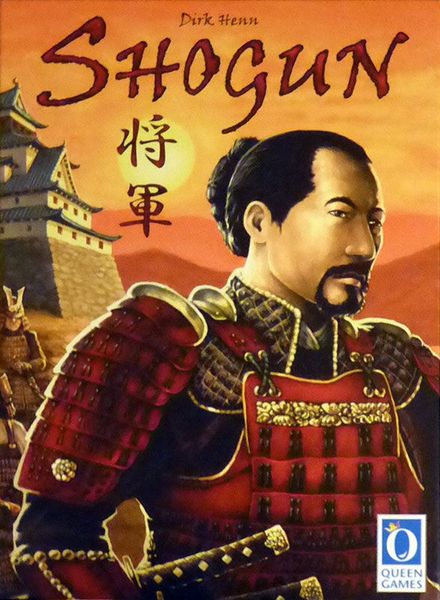
Shogun (2006) Board Game

Shogun is a board game that was originally released in in 2006. Designed by Dirk Henn and published by Queen Games, it is a strategic game set in medieval Japan where players take on the roles of daimyos vying for control of the country.
Game Components of Shogun
How To Setup Shogun
To set up Shogun, players start by placing their individual boards and selecting their Daimyo cards and corresponding color sets. Each player receives a set of 64 army cubes, tall and short disks, and an initial amount of war chests (12 in a 5-player game, 15 in a 4-player game, and 18 in a 3-player game). Players deploy their army groups to their starting provinces by transferring them from their individual boards to the game board. The province cards are distributed, and the game board is prepared with the action cards and special cards.
Gameplay Mechanics and Game Objective
Player Experience
Playing Shogun involves a deep strategic layer where players must balance long-term army investments with short-term tactical decisions. The game is known for its complex mechanics, including secret resource allocation, bidding for turn order, and the use of special cards like ninja and ronin. Players need to manage their provinces, buildings, and armies carefully to achieve dominance. The game’s unique Cube Tower adds an element of unpredictability to battles, making each conflict exciting and immediate.
Pros
Cons
Personal Thoughts on Shogun
Shogun is a game tailored for enthusiasts of strategic board games who appreciate complexity and depth. It is ideal for those who enjoy resource management, area control, and strategic planning. While it may not be as popular as some other games like Risk, Shogun offers a more mechanically interesting experience that rewards players for their strategic thinking and tactical execution. However, due to its complexity and lengthy setup, it is not suitable for casual gamers or those looking for a quick gaming session.
We are supported by our audience. When you purchase through links on our site, we may earn an affiliate commission, at no extra cost for you. Learn more.
