
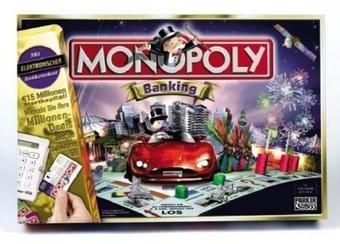
Monopoly: Banking (2005) Board Game

Monopoly: Banking is a modern twist on the classic Monopoly board game, first released in in 2005. It incorporates electronic banking instead of paper money, making transactions easier and faster. The game retains the core gameplay elements of Monopoly, where players buy and trade properties to build their real estate empires.
Game Components of Monopoly: Banking
How To Setup Monopoly: Banking
To set up the game, players start with $15 million on their respective debit cards. The Electronic Banking Unit is initialized by holding the C button to reset everyone’s monetary value. Each player selects a token and places it on the “Go” space. The banker shuffles the Chance and Community Chest cards and places them face down on their respective spaces on the board.
Gameplay Mechanics and Game Objective
Player Experience
The game maintains the classic Monopoly feel but with modern flourishes. Players enjoy the ease of electronic banking, which simplifies transactions but can also introduce new complexities. The updated tokens and property names add a contemporary touch, making the game appealing to both old and new fans. However, the electronic banking system can sometimes lead to confusion and errors if not managed carefully.
Pros
Cons
Personal Thoughts on Monopoly: Banking
Monopoly: Banking is ideal for families and groups looking to update their classic Monopoly experience with a modern twist. It is particularly suited for players aged 8 and above, as it teaches important financial concepts in a fun and interactive way. However, it may not be the best choice for those who prefer the simplicity of the original cash-based version or those who find the electronic banking system too complex. Overall, it offers a fresh take on the beloved game, making it a great addition to any board game collection.
We are supported by our audience. When you purchase through links on our site, we may earn an affiliate commission, at no extra cost for you. Learn more.
