
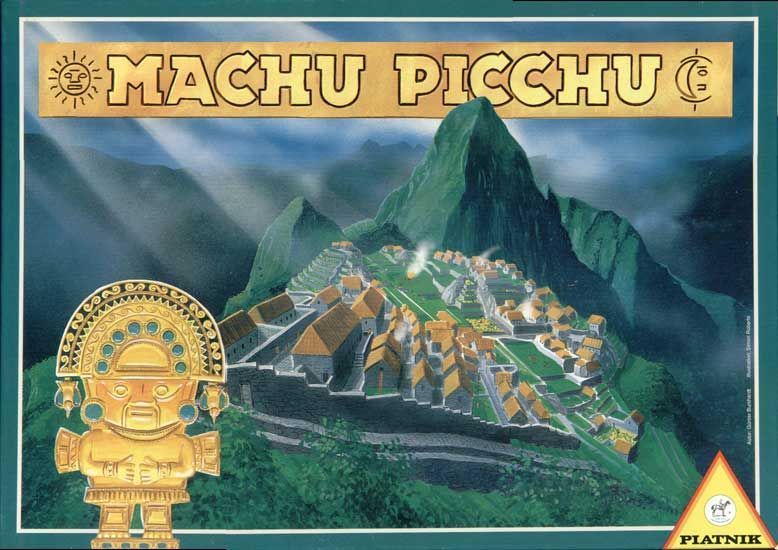
Machu Picchu (1998) Board Game

Machu Picchu is a board game that was released in in 1998. It is designed for 2-4 players and has a runtime of about 40 minutes. The game is set in ancient times and revolves around the exploration of the famous Incan citadel of Machu Picchu. Players take on the role of archaeologists trying to uncover hidden treasures and artifacts within the ruins.
Game Components of Machu Picchu
How To Setup Machu Picchu
Setting up Machu Picchu involves placing the game board in the middle of the playing area. Each player chooses their tokens and places them on the designated starting positions on the board. Resource cards are shuffled and distributed according to the game’s initial setup rules. Players also receive a set of worker pieces. The scoreboard and scoring tokens are placed within reach of all players.
Gameplay Mechanics and Game Objective
Player Experience
Playing Machu Picchu is an engaging experience that combines strategy with luck. Players must balance their resource gathering and worker placement to maximize their points. The game is relatively short, making it accessible for families and casual gamers. The thematic elements, such as growing corn and feeding llamas, add a unique touch to the gameplay.
Pros
Cons
Personal Thoughts on Machu Picchu
Machu Picchu is ideal for families and casual gamers looking for a light to medium-weight strategy game. It is particularly suited for those interested in resource management and worker placement mechanics. While it may not offer the depth that hardcore gamers seek, it provides a fun and educational experience that can be enjoyed by a wide range of players.
We are supported by our audience. When you purchase through links on our site, we may earn an affiliate commission, at no extra cost for you. Learn more.
