
Chinese Poker Board Game

Chinese Poker, also known as Pusoy, is a card game that originated in Asia. It is a popular game that is commonly played in households and casinos. The game has simple rules and is easy to learn, making it accessible to players of all ages.
Game Components of Chinese Poker
How To Setup Chinese Poker
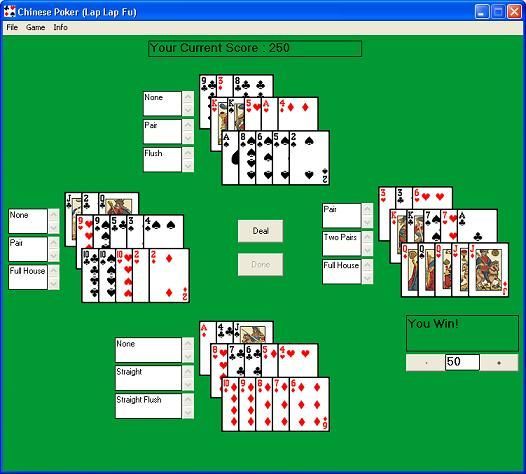
Players start by agreeing on the point value for the game. The dealer shuffles the deck and deals 13 cards to each player. In a two-player game, each player receives one hand, with the second hand reserved for the next round. In games with three or four players, each player receives one hand, and any remaining hand is discarded if there are only three players.
Gameplay Mechanics and Game Objective
Player Experience
Chinese Poker offers a unique challenge that differs from traditional poker games. Players must strategically divide their 13 cards into three distinct hands, ensuring that each hand follows the ranking rules. This game requires a good understanding of poker hand rankings and strategic thinking to maximize points.
Pros
Cons
Personal Thoughts on Chinese Poker
Chinese Poker is ideal for those who enjoy strategic card games and are looking for a break from traditional poker formats. It requires a blend of luck and skill, making it appealing to players who like to think strategically about their card distribution. However, it may not be the best fit for those new to poker or looking for a simple, quick card game.
We are supported by our audience. When you purchase through links on our site, we may earn an affiliate commission, at no extra cost for you. Learn more.
