
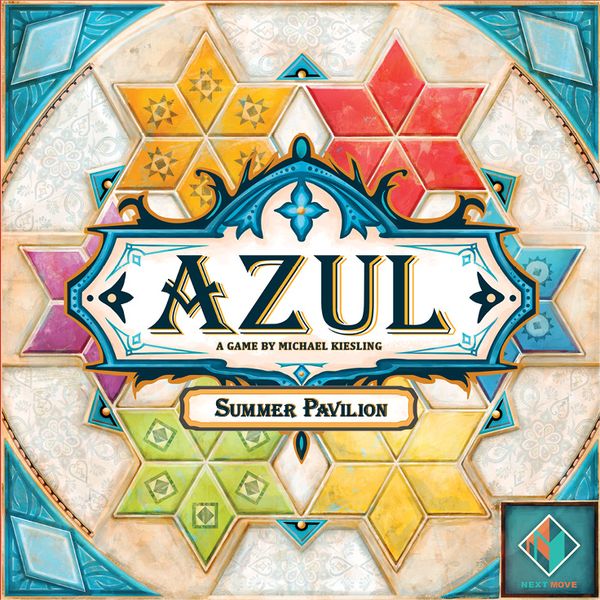
Azul: Summer Pavilion (2019) Board Game

Azul: Summer Pavilion is the third installment in the Azul series of board games, following Azul and Azul: Stained Glass of Sintra. Designed by Michael Kiesling and published by Next Move Games in 2019, this abstract strategy game challenges players to create intricate patterns using colorful tiles.
Game Components of Azul: Summer Pavilion
How To Setup Azul: Summer Pavilion
Setup is straightforward. Each player takes a player board and a scoring marker in their matching color, placing the scoring marker on five on the bonus tile board. The round marker is set to round one, and the colored tiles are placed into the bag. The bonus market is filled with ten randomly drawn tiles. A number of factory tiles, based on the number of players, are placed in the center, each filled with four random tiles. The first player tile is placed in the center of the factory tiles.
Gameplay Mechanics and Game Objective
Player Experience
Azul: Summer Pavilion offers a more strategic and less punishing experience compared to the original Azul. The game introduces a turn-based placement phase, which adds depth and requires more thoughtful tile placement. This can make the game longer, typically lasting between 30 to 45 minutes, but it also enhances the decision-making process and the overall strategy.
Pros
Cons
Personal Thoughts on Azul: Summer Pavilion
Azul: Summer Pavilion is ideal for fans of strategic tile placement and pattern building games. It suits players who enjoy deeper gameplay mechanics and are willing to invest a bit more time into each game. While it may not be as quick or as confrontational as the original Azul, it offers a rich and satisfying experience that rewards thoughtful planning and execution. This game is particularly suited for those who appreciate the Azul series but are looking for a slightly different and more challenging experience.
We are supported by our audience. When you purchase through links on our site, we may earn an affiliate commission, at no extra cost for you. Learn more.
