
Balbo’s game

Balbo’s Game
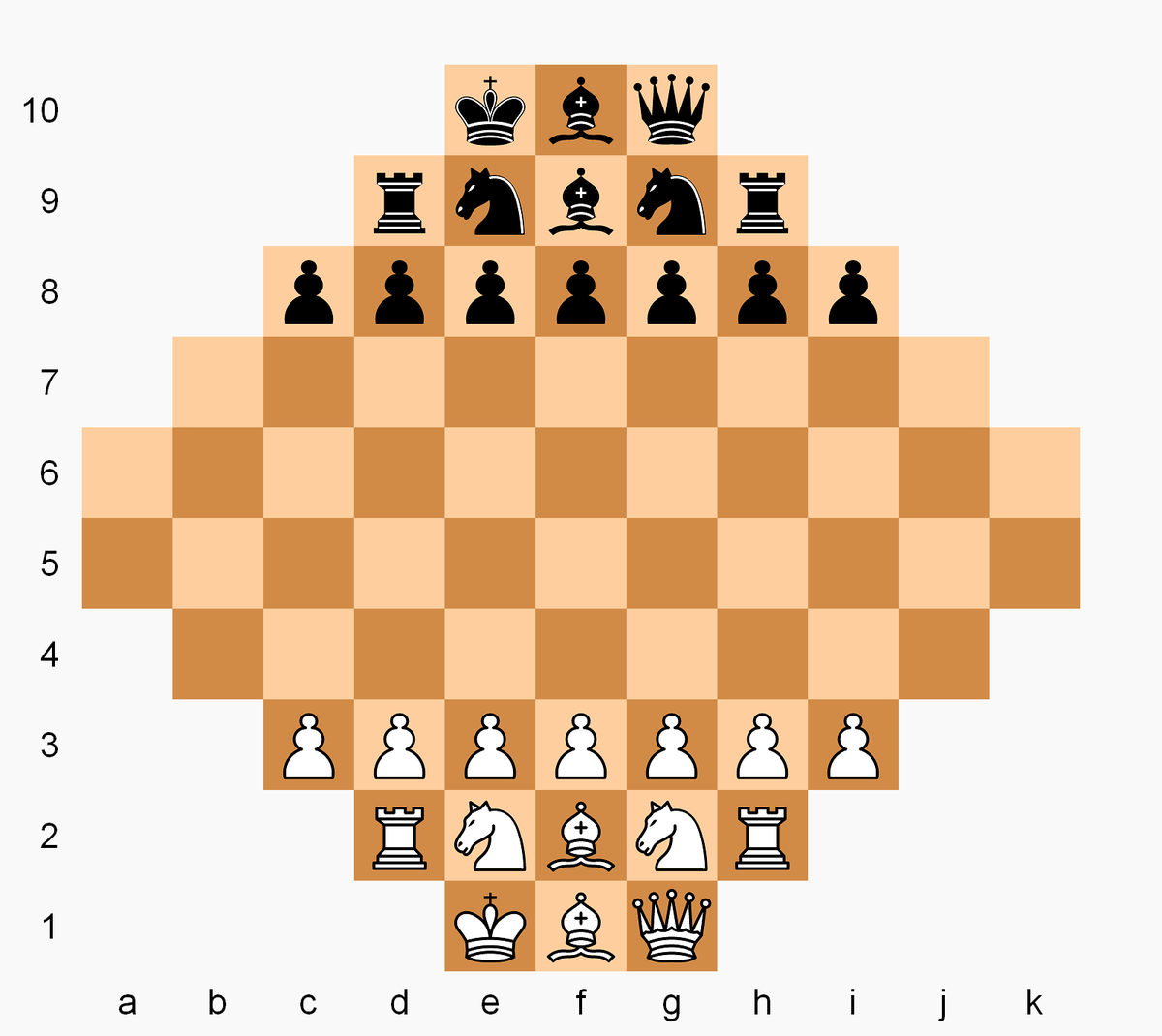
Balbo’s Game is a chess variant invented by M. G. Balbo in 1974. The game is played on a chessboard with a unique shape, comprising 70 squares. Each player commands a full chess set, and the objective is to achieve checkmate, as in standard chess. The game is popular and significant due to its innovative board design and the challenge it presents to players.
Game Components of Balbo’s game
How To Setup Balbo’s game
To set up Balbo’s game, start with the modified chessboard, which has a distinct shape. Each player begins with a full set of chess pieces minus one pawn. The arrangement of pieces follows traditional chess setup rules, but the board’s unique shape and the absence of one pawn per player introduce an immediate layer of complexity.
Gameplay Mechanics and Game Objective
Mechanics
– Pawns on the d- through h-files promote normally.
– Pawns on the c- and i-files promote only to a bishop or knight.
– Pawns on the outer four files do not promote.
Player Experience
Balbo’s game offers a challenging and strategic experience, especially for those familiar with traditional chess. The unique board shape and promotion rules force players to adapt their strategies, making each game engaging and unpredictable. Players must think creatively about piece development and pawn promotion, adding a layer of complexity to the game.
Pros
Cons
Personal Thoughts on Balbo’s game
Balbo’s game is ideal for experienced chess players looking to spice up their gameplay with new challenges. It is not recommended for beginners, as the unique rules and board layout can be overwhelming. For those who enjoy strategy and are willing to learn new mechanics, Balbo’s game provides a rich and engaging experience that tests their chess skills in a new and exciting way.
We are supported by our audience. When you purchase through links on our site, we may earn an affiliate commission, at no extra cost for you. Learn more.
