
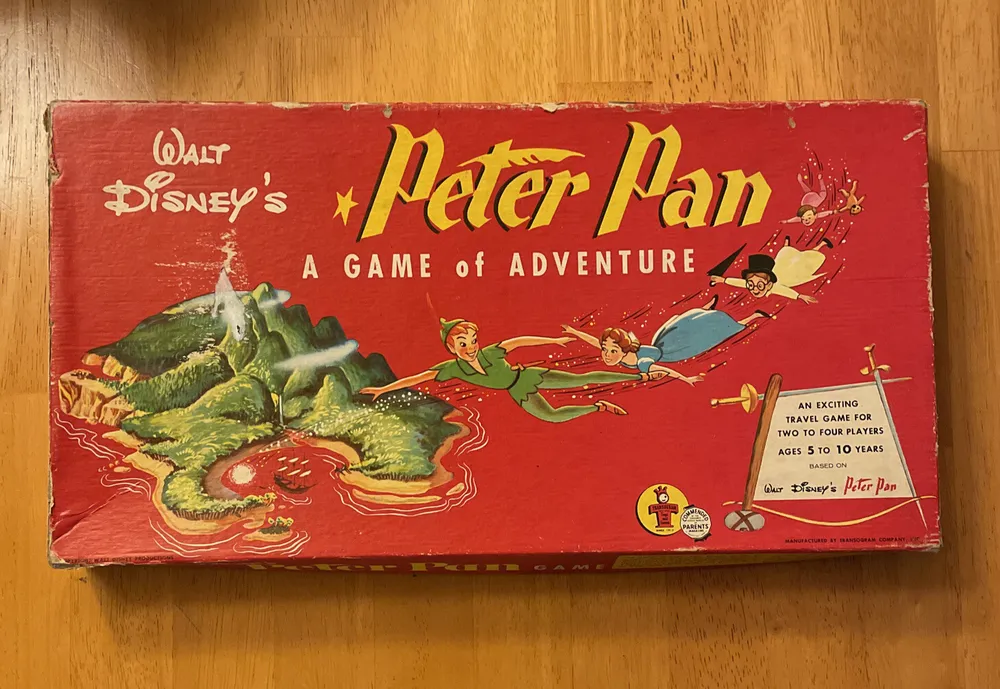
Walt Disney’s Peter Pan Game (1953)

Walt Disney’s Peter Pan
“Walt Disney’s Peter Pan” is a board game adaptation of the classic Peter Pan story, where players work together to search for lost children in Neverland. The game is popular and significant because it is based on the beloved story by J.M. Barrie, which has been a part of children’s literature and entertainment for over a century. The story of Peter Pan began as a novel titled “The Little White Bird” in 1902, and it was later adapted into a play by Barrie in 1904. The play was a phenomenal success, and Barrie wrote a novelization of the play in 1911, published under the title “Peter and Wendy”.
Game Components of Walt Disney’s Peter Pan Game
How To Setup Walt Disney’s Peter Pan Game
To set up the game, each player chooses a character and receives the corresponding instruction card. The game board is laid out, and Tinker Bell’s Magic Spinner is placed within reach. Players start at the Darling’s home and prepare to journey through Never Land.
Gameplay Mechanics and Game Objective
Player Experience
Playing Walt Disney’s Peter Pan Game is an immersive experience that brings the adventures of Peter Pan to life. Players navigate through iconic locations from the movie, following specific directions and instructions on their character cards. The game fosters imagination and excitement as players imagine themselves on a fantastic journey through Never Land.
Pros
Cons
Personal Thoughts on Walt Disney’s Peter Pan Game
This game is perfect for families and collectors of vintage board games. It offers a fun and nostalgic way to engage with the beloved story of Peter Pan. The game’s simplicity and themed elements make it an excellent choice for younger children who are fans of the Disney character. For those who grew up with this game, it can be a wonderful way to relive childhood memories and share them with the next generation.
We are supported by our audience. When you purchase through links on our site, we may earn an affiliate commission, at no extra cost for you. Learn more.
